

Scale at Speed™






 English (Global)
 French (Canada)

Overview
The global demand for adaptive manufacturing is accelerating.
AI and automation, supply chain fragility, climate change imperatives, and workforce evolution are four forces transforming traditional manufacturing.
Adaptive manufacturing will serve as the blueprint for future-ready enterprises, reshaping industrial operations with intelligent systems, shifting global dynamics, and increasing resilience.
Our report, based on a survey of 690 manufacturing leaders, explores how manufacturers can turn disruption into opportunities by modernizing their operations with adaptive, intelligent and sustainable systems.
94%
Manufacturers believe the future hinges on sustainability and adaptability.
What is adaptive manufacturing?
Adaptive manufacturing is the ability of an enterprise to respond with agility to real-time events such as market changes, supply chain disruptions and customer demand fluctuations. This responsiveness is achieved through collaborative partnerships, investments in innovation and technology, and robust supply chains which can deliver personalized value to customers. Talent, sustainability and decision intelligence are crucial to the successful development of adaptive manufacturing.
GenAI, Automation, and More, Are Making Manufacturers More Adaptive
Over two-thirds (67%) of manufacturers are on track to meet their Industry 4.0 goals. Yet, more than a quarter (26%) are actively scaling back their Industry 4.0 initiatives – not because of lack of belief, but to focus on measurable ROI-led transformation.
This apparent contradiction underscores the growing need for measurable ROI among businesses. At Tech Mahindra, we see greater success when Industry 4.0 adoption follows a more strategic, incremental, value-led approach rather than a one-off transformation.
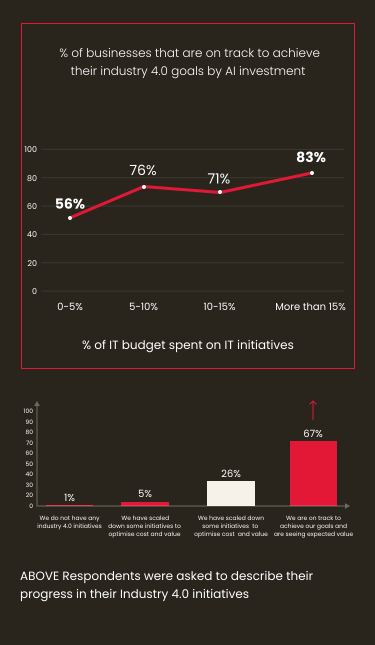
Respondents were asked which areas of manufacturing they are prioritizing for adaptability (selecting all that applied)
AI in the Ascendent
AI is overwhelmingly considered the technology most likely to change the way businesses operate. 58% ranked it as most likely to make the biggest difference to their industry.
58%

Get the Full Adaptive Manufacturing Report
The Rise of Adaptive Manufacturing
In an increasingly competitive and cost-sensitive market, firms are pursuing adaptive manufacturing to reduce cost and waste (60%). Over half (54%) believe it will also help them gain an advantage over the competition, while a further 51% say the impetus to adopt adaptive principles is coming from customers.
Respondents were asked which were the biggest barriers preventing their firm from becoming a more adaptive manufacturer
(selecting all that applied).
Respondents were asked which areas of manufacturing they are prioritizing for adaptability
(selecting all that applied)
Advanced Tech and Talent Are Critical for Adaptive Manufacturing
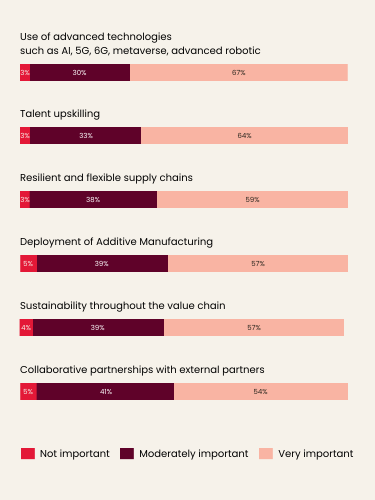
Neither technology nor people alone can deliver adaptive manufacturing: both are critical to success. More than two-thirds (67%) say advanced tech such as AI and 6G will be required, but another 64% cite talent upskilling as an imperative.
Respondents were asked how important the listed factors are to building an adaptive manufacturing ecosystem.
AI can support the workforce of the adaptive manufacturing ecosystem.
Manufacturers are investing 11% (mean) of IT budgets into AI, and nearly half (46%) say the spend is driven by a scarcity of skills. This fact that nearly half of AI spend is prompted by skills scarcity highlights its role in augmenting, not replacing, human capability. By automating repetitive tasks, AI is freeing up time for skilled workers to focus on higher-value activities. Organizations need to balance AI initiatives with a human centered approach for sustainable, long-term success.
Mean: 11%
Respondents were asked what percentage of their IT budget is allocated toward AI initiatives
Respondents were asked what factors influence their AI investment decisions
(selecting all that applied)
Digital Innovation for a Responsive and Sustainable future
New technologies are providing opportunities in efficiency, health and safety, flexibility and data-driven manufacturing. They’re useful on the people’s side, too. In the old days, when an experienced maintenance operative left, all the knowledge left the business. Now we can use digital capabilities to help train new employees and transfer tacit knowledge.
CIO
A Fortune 500 specialty materials manufacturer
Respondents were asked what strategies their organization is implementing to enhance supply chain resilience amid geopolitical risks and economic uncertainties (selecting all that applied).
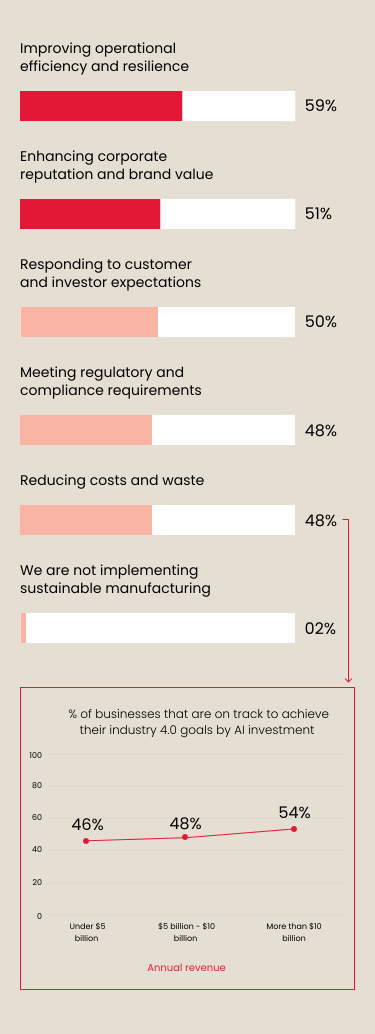
98% of firms are implementing sustainable manufacturing.
Drivers include improvements in operational efficiency (59%), corporate reputation (51%) and responses to customer expectations.
This near-universal adoption of sustainable manufacturing signals a major shift: sustainability is no longer just a compliance checkbox, but a core business imperative linked to efficiency and profitability.
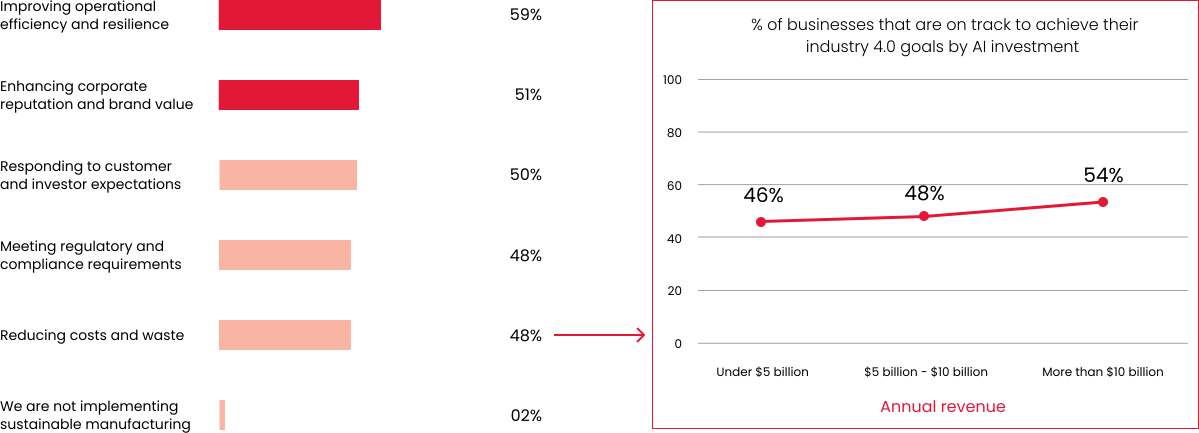
Respondents were asked what strategies their organization is implementing to enhance supply chain resilience amid geopolitical risks and economic uncertainties (selecting all that applied).
What Lies Ahead for Adaptive Manufacturers
The need to push onward to a more adaptive model is clear. We see the benefits impacting manufacturers in six key areas: product quality, reliability, predictability, connected supply chain, digitally-aware workers and sustainability.
For manufacturers to embrace this new era, they must:

Balance skills and technology to reap the most benefit

Apply adaptive principles across the supply chain

Consider all dimensions of sustainability

Grasp the potential for competitive advantage
From Automation to AI
Adapt today to lead tomorrow — start your
transformation journey now