

Scale at Speed™







 English (Global)
 French (Canada)

- Machine learning, GenAI, and intelligent automation are shifting the paradigm in underwriting claims, broker engagement, and regulatory compliance. Thus, shifting from incremental digitization to enterprise-wide transformation.
- The new wave of the digital era enables quality and intelligence of decision-making across the insurance value chain.
- Insurers integrating AI into their core operating models, moving beyond isolated pilots, are strategically positioned to outperform critical metrics such as loss ratios, expense ratios, and combined ratios.
- As AI slowly redefines the insurance landscape, enterprises are increasingly looking for partners who provide strategic guidance, industry differentiation, and end-to-end transformation support beyond technology implementation.
The Forces Redefining UK and European Insurance
The UK and European insurers are navigating a convergence of pressures that legacy modernization alone cannot resolve. Cost ratios remain stubbornly high. Climate and environmental, social, and governance (ESG) risk is intensifying underwriting complexity. Regulatory obligations under the Prudential Regulation Authority (PRA), the Financial Conduct Authority (FCA), the European Insurance and Occupational Pensions Authority (EIOPA), and Solvency II continue to expand in scope and scrutiny. Talent shortages constrain the capacity to execute transformation at scale.
AI has arrived in this environment—not as a peripheral experiment, but as an intelligence layer capable of reshaping every function from underwriting to capital management. The question this paper addresses is not whether AI matters, but how insurers can responsibly industrialize AI within regulatory boundaries and generate measurable financial and operational outcomes.
Five Technology Waves Through a European Lens
To understand why the AI wave is different, it helps to trace what preceded it. Each technology wave reshaped the competitive and operational baseline for UK and European insurers, leaving behind both new capabilities and entrenched constraints.
Dot-Com: Digital Distribution Foundations (Late 1990s–2002)
The first wave introduced digital access as a customer expectation. In the UK, price-comparison websites transformed the distribution of motor insurance. Early direct-to-consumer models began challenging broker-driven relationships. Continental Europe absorbed this wave more slowly, given deeper reliance on intermediary channels. Core systems, however, largely stayed unchanged. The dot-com wave digitized access without transforming decision-making.
Post-2008 Financial Reset
The global financial crisis redirected technology investment from growth to regulatory compliance. Solvency II drove substantial modernization of capital modeling, stress testing, and reporting. Technology became a regulatory necessity rather than a growth enabler. Many of the legacy estates that now constrain insurers were entrenched during these compliance-driven spending years.
Mobile and InsurTech (2010–2015)
The UK emerged as one of Europe’s most active InsurTech ecosystems. Telematics-based motor insurance, digital-first Managing General Agents(MGAs), claims automation platforms, and embedded insurance pilots permanently shifted customer expectations. Faster claims settlement, digital onboarding, and transparent pricing became baseline requirements. Core modernization continued to lag. The Nordic markets and Germany saw steady but slower adoption.
Cloud and Core Modernization (2015–2022)
Cloud adoption introduced the infrastructure for scalable data platforms but did not transform decision-making. The UK insurers moved more aggressively, supported by closed-book consolidations and increased outsourcing. European carriers adopted more cautious migration strategies, influenced by data residency and sovereignty concerns. Many insurers remain mid-journey in policy administration modernization, claims platform replacement, and data lake construction. Cloud laid the foundation. The intelligence layer was still missing.
Artificial Intelligence: The Current Wave
AI is categorically different from its predecessors. It does not merely automate existing workflows. It alters the quality of decisions made across underwriting, claims, distribution, and capital management. The UK market is leading AI experimentation, while European regulators are setting the governance standards that define how AI is deployed across the broader market. The competitive race is now centered on a single question: who can industrialize AI responsibly within regulatory boundaries? Previous waves of technology improved speed and access. AI changes the quality of decisions made at every level of the insurance value chain. That is a fundamentally different kind of disruption.
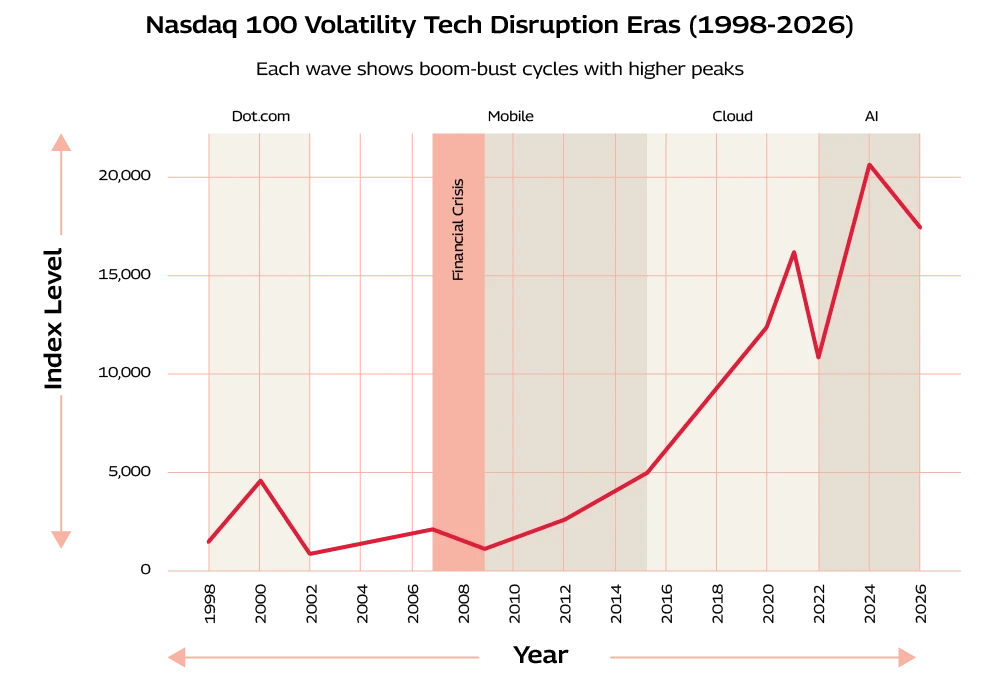
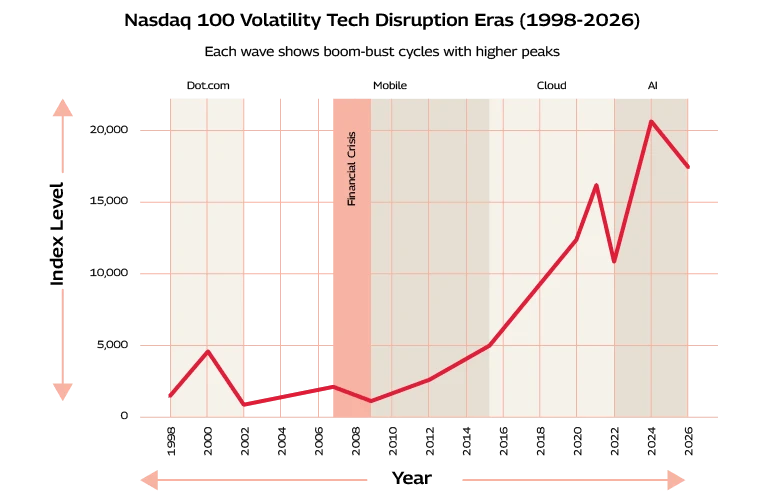
Figure 1: AI Disruption Across Five Technology Waves in Europe.
Where AI Creates Tangible Value
AI delivers quantifiable value across four primary domains in the UK and European insurance. Each represents a distinct opportunity. They are most powerful when pursued as part of an integrated operating model transformation rather than as isolated initiatives.
Underwriting Excellence
Traditional underwriting relies on historical data, actuarial tables, and manual risk assessment. These processes are slow, expensive, and increasingly inadequate in the face of climate volatility and new risk categories.
AI enables real-time data ingestion from telematics, satellite imagery, IoT sensors, and behavioral signals to produce dynamic, climate-adjusted risk models. Automated underwriting for small-to-medium enterprise (SME) commercial lines is already reducing cycle times from days to minutes for qualifying risks. In specialty markets—including the Lloyd’s of London ecosystem—AI-driven pricing engines are enabling more granular risk differentiation, supporting better portfolio management and capital efficiency.
The result is not just cost reduction. AI-enabled underwriting structurally improves loss ratios by identifying risks that traditional models systematically misprice.
Claims Transformation
Claims represent the largest single cost pool in insurance operations—and the domain where AI delivers the most immediate, measurable return. UK insurers face persistent operational cost pressure and claims leakage: value lost through inaccurate reserving, fraud, and inefficient settlement processes.
AI addresses each of these levers. Image-based damage estimation using computer vision accelerates first notice of loss (FNOL) processing and reduces the need for manual inspections. Intelligent reserve prediction models improve reserving accuracy, reducing both over- and under-provisioning. Fraud ring detection—combining graph analytics with behavioral signals—identifies organized fraud patterns that individual transaction reviews miss.
Across these applications, leading UK insurers report a 15 to 25 percent reduction in claims-handling expenses in early deployments. Further gains are available as models mature and training data accumulates. Claims is not just the largest AI value pool—it is also where faster, more accurate settlement directly improves customer outcomes. Claims automation is not only about cost reduction. Faster, more accurate settlement improves customer outcomes and reduces the leakage that erodes profitability. In our experience, it is the highest-confidence starting point for AI investment in insurance.
Closed-Book Optimization
The UK life, pensions, and non-life closed-book consolidation market presents a structurally distinctive AI opportunity. Closed-book portfolios—legacy policy blocks no longer open to new business—require sustained servicing at the lowest possible cost while maintaining regulatory compliance and policyholder obligations.
AI enables intelligent digitization of documents from legacy archives, automated policy servicing at scale, and claims-leakage analytics across run-off portfolios. For acquirers consolidating multiple closed books, AI-driven data extraction and reconciliation dramatically reduce integration costs. Outcome-based commercial models, in which the integrator shares in the cost savings generated, are well-suited to this market. We see a growing appetite among UK closed-book acquirers for exactly this kind of partnership structure.
Regulatory and Risk Intelligence
European insurers operate within one of the world’s most complex regulatory environments. PRA, FCA, EIOPA, the General Data Protection Regulation (GDPR), and Solvency II collectively create obligations around model governance, explainability, and audit trails that are incompatible with black-box AI approaches.
This regulatory complexity is not a barrier to AI adoption. It is a design constraint that shapes how AI must be built. Insurers require AI operating models that are explainable, auditable, and governed from inception. For GSIs, the ability to deliver responsible AI—not just capable AI—is a primary differentiator in the European market. The ability to demonstrate regulatory audit readiness from day one is increasingly what separates winning proposals from those that do not.
Market Realities and Constraints
Despite the scale of the opportunity, UK and European insurers face structural constraints that limit the pace and depth of AI adoption. Understanding these constraints is essential to designing transformation roadmaps that are realistic, not just aspirational.
Aging Core Systems
This is the most pervasive challenge. Many insurers operate policy administration platforms more than two decades old, built on batch-processing architectures that cannot support real-time AI inference. Data estates are frequently fragmented across legacy systems, acquired entities, and outsourced operations—making it difficult and expensive to assemble the unified data foundations that AI requires.
Cost and Margin Pressure
Competing priorities for technology investment, combined with sustained pricing pressure in personal and commercial lines, reduce the capital available for multi-year transformation programs. Insurers face hard choices about sequencing investment in core modernization versus AI-specific capability.
Talent Scarcity
The actuarial, data science, and AI engineering skills required to deliver and sustain AI programs are scarce and expensive across both the UK and European markets. Insurers that cannot attract or develop this talent struggle to move from pilot to production.
Climate Risk Uncertainty
Insurers face growing uncertainty in property and casualty lines as climate-related events become more frequent and more severe. AI models trained on historical loss data may systematically underestimate emerging risk. Continuous model refresh and validation are not just good practice—they are regulatory and commercial necessities.
The critical insight from our work with insurers is this: AI layered onto legacy architecture, without underlying data and infrastructure transformation, will not scale. Point pilots generate proof-of-concept value but do not translate into sustained competitive advantage. The question for insurers is not whether to invest in predictive and generative models but whether to invest in the foundational architecture that enables their industrialization.
The Future of Insurance in the Intelligence Era
Every major technology wave in insurance has followed the same arc: initial hype, a period of correction, consolidation among early leaders, and a permanent elevation of the structural baseline. The AI wave will follow the same pattern—with one important difference. The gap between leaders and laggards is likely to be larger than in previous cycles, because AI compounds. Insurers that build genuine machine learning and generative AI capability today will have better-trained models, richer proprietary data assets, and deeper institutional knowledge than those who wait.
TAGS:
Insurance
Frequently Asked Questions
Our FAQ section is designed to guide you through the most common topics and concerns.
AI can augment underwriting with richer, real-time risk signals (telematics, imagery, IoT, behavioural indicators) and enable more granular segmentation—improving risk selection and pricing adequacy, not only cycle time. In Europe, insurers must design these capabilities with strong governance, transparency, and oversight expectations in mind.
The EU AI Act introduced a risk-based regime and has cross-sector scope. It places the strongest obligations on high-risk AI systems. In insurance, systems used for risk assessment and pricing in life and health insurance are specifically treated as high-risk in the EU context (per EIOPA’s discussion of the AI Act’s impact on insurance)
Common blockers are fragmented data estates, legacy policy/claims platforms built for batch processing, inconsistent controls, and insufficient MLOps/LLMOps. Without modern data pipelines, integration patterns, and governance, pilots remain “digital sandboxes” rather than production capability.
References
- European Insurance and Occupational Pensions Authority. (2023). EIOPA’s approach to the supervision of the use of artificial intelligence by regulate…
- Financial Conduct Authority. (2024). AI and machine learning in financial services. FCA.
- Prudential Regulation Authority. (2023). Artificial intelligence and machine learning: Discussion paper. Bank of England.
- McKinsey and Company. (2023). The state of AI in insurance: Global survey results. McKinsey Global Institute.
- Deloitte Insights. (2024). 2024 insurance industry outlook. Deloitte.
- Lloyd’s of London. (2023). Future at Lloyd’s: Technology strategy update. Lloyd’s.
