







For much of the digital era, innovation has revolved around the screen. We refined how people interact with systems – cleaner interfaces, intuitive apps, dashboards that explained the world in a few swipes. That phase taught us the craft of usability.
The next phase asks something different: what happens when technology no longer waits for us to touch it? When does it simply exist within the space-responsive, aware, quietly attentive?
The Shift
Ambient and spatial computing represent precisely that inflection. Instead of drawing value from a device, value starts to emerge around us. Rooms, workplaces, clinics, retail floors, and even vehicles begin to behave less like objects and more like extensions of our intent. These environments sense, infer, and adapt, becoming partners to activity rather than instruments of it.
It's more than sprinkling sensors across surfaces. The change is relational. Technology fades into the background, forming a supportive environment for work and life rather than a separate engagement.
Why It Matters
The implications are profound.
First, friction drops dramatically. A clinician who no longer needs to log data can focus on the patient. A meeting space that sets itself up as participants walk in quietly returns minutes to every agenda. Multiplied across an enterprise, that's a material productivity gain.
Second, the operational intelligence captured through ambient systems reflects what actually happens, not what someone remembered to enter. Decisions become grounded in the flow of real behavior, not retrospective data entry.
And third, there's a cultural shift. People stop pausing work to "use" technology. It blends into the rhythm of what they're doing. The environment itself becomes cooperative.
How It Works
At its core, ambient computing fuses two distinct capabilities: sensing and agency.
Sensing-delivered through cameras, proximity nodes, audio, and environmental inputs, and edge compute-collects subtle cues about presence, motion, and state. Agentic AI interprets those cues, assigning meaning and initiating appropriate actions.
On their own, these systems are interesting. Combined, they begin to resemble a nervous system: perception → interpretation → response.
What It Looks Like in Practice
Imagine a meeting room that not only recognizes who's entering but also preloads the agenda, tunes the lighting for remote participants, and displays the latest metrics on shared displays.
Or a retail environment that senses traffic flow and dynamically shifts signage, playlists, and inventory layout in response.
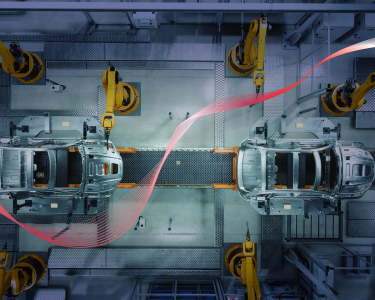
Or a manufacturing cell that pre-empts a safety incident by slowing a conveyor or locking access before a risky condition develops.
These are not distant possibilities; they are design choices available today.
The Business Case
The return on investment extends far beyond efficiency. Ambient computing changes the quality of experience, enhances safety, and creates what might be called operational memory-a continuous, environmental log that's more accurate and timelier than any manual record.
Leaders evaluating such systems should weigh more than cost savings. The real dividends emerge in service quality, risk reduction, and the emergence of richer, more intuitive customer engagement.
Getting Started
The smartest approach is incremental. Start with a single pilot, perhaps in a conference room, a patient ward, or a high-risk factory zone. Instrument it lightly: a handful of sensors, a focused agentic workflow.
Track the tangible effects-how much friction is removed, how much time reclaimed, how error rates shift. Use that data to tune the context models and refine how the system interprets and responds to user input. Then, extend cautiously: another room, another workflow, another layer of autonomy.
Over time, the organization doesn't simply use ambient technology; it begins to operate within it. When done well, the technology disappears, and what remains is a workspace that seems almost bare, yet clear enough to know what you need next.