






Smarter Designs Done Sustainably with AI
Companies that produce goods are facing significant pressure to reduce their environmental footprint. Increasingly, consumers are leaning towards products that are better for the planet. Enterprises today must integrate sustainability at the design and development stage to navigate these regulatory, market, and societal pressures and meet this sustainability imperative with ease. Good sustainable design that includes every aspect of the product development value chain can help minimize energy and water consumption, waste and emissions by using renewable, recyclable materials ethically sourced throughout the supply chain.
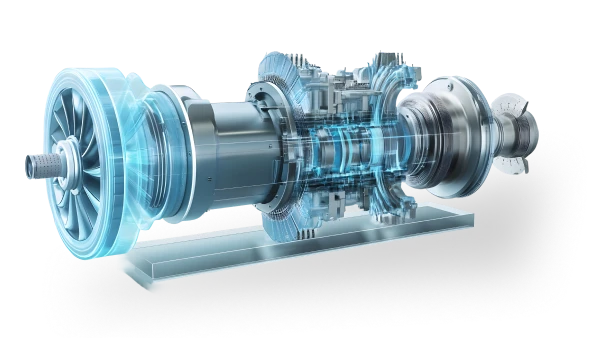
In this whitepaper, we explore how AI and generative AI tools can enable smarter design choices, measure environmental impact, and generate innovative solutions. Digital twins, simulations, and rapid prototyping can optimize designs for functionality, manufacturability, and sustainability. Using AI to enhance sustainability in product development can help set businesses up for the future—both environmentally and commercially.
Read WhitepaperKey Highlights
AI can screen millions of material combinations faster than we’ve ever seen before
What would usually take years to process, AI can screen in a span of days. This helps with rapid identification of sustainable alternatives.
Sustainability is the only way forward for enterprises
Truly sustainable brands are poised to seize competitive advantage as sustainability promotes trust—especially among younger consumers.
Strategies for Sustainable Design
80% of a product’s sustainability impact can be determined even before it is built. Prioritizing environmental measures as a core design principle will ensure they are incorporated throughout a product’s entire life cycle.
Here are six complementary strategies that can help companies understand and address the environmental impact of a product across its lifecycle, from sourcing to end of life.
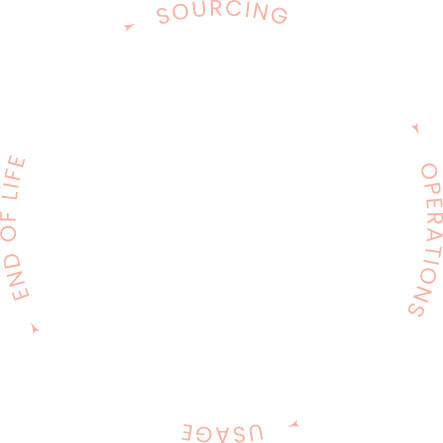

SUSTAINABLE DESIGN STRATEGIES
Towards Greener Thinking

1. Circularity
- Design for disassembly
- Design for end-of-life collection
- Design for reuse
- Enable material traceability
- Enable material homogeneity

2. Product Efficiency
- Variable energy consumption
- Energy consumption efficiency
- Material consumption efficiency
- Change consumer behavior

3. Longevity and Effective Usage
- Design for repairability and maintenance
- Design for upgradability and adaptability
- Design to last
- Design for remanufacturing
- Design for multiple uses

4. Green Supply Chain
- Frugal processes and operations
- Detoxified processes
- Standardization and modularity
- Design for logistics

5. Next-best Materials Selection
- Renewable and biodegradable material
- Recycled material
- Recyclable material
- Lightweight material

6. Dematerialization
- Content reduction
- Design for value
- Digitization
- Weight reduction
- Minimal material and packaging
- Generative design
Source: Compiled by MIT Technology Review Insights based on data from BCG Analysis, 2025
SUSTAINABLE DESIGN STRATEGIES
Towards Greener Thinking
1. Circularity
- Design for disassembly
- Design for end-of-life collection
- Design for reuse
- Enable material traceability
- Enable material homogeneity
2. Product Efficiency
- Variable energy consumption
- Energy consumption efficiency
- Material consumption efficiency
- Change consumer behavior
3. Longevity and Effective Usage
- Design for repairability and maintenance
- Design for upgradability and adaptability
- Design to last
- Design for remanufacturing
- Design for multiple uses
4. Green Supply Chain
- Frugal processes and operations
- Detoxified processes
- Standardization and modularity
- Design for logistics
5. Next-best Materials Selection
- Renewable and biodegradable material
- Recycled material
- Recyclable material
- Lightweight material
6. Dematerialization
- Content reduction
- Design for value
- Digitization
- Weight reduction
- Minimal material and packaging
- Generative design
Source: Compiled by MIT Technology Review Insights based on data from BCG Analysis, 2025
Source: Compiled by MIT Technology Review Insights based on data from BCG Analysis, 2025
At Tech Mahindra, we leverage Siemens’s Teamcenter X Product Cost Management solution, a hybrid cloud platform designed to help manufacturers calculate cost, profitability, and carbon footprint. This helps our customers identify design aspects that are carbon intensive and assess whether they are necessary or can be changed.
AI in the Real World
Essential AI Tools for Sustainability

Digital Twins and Simulations
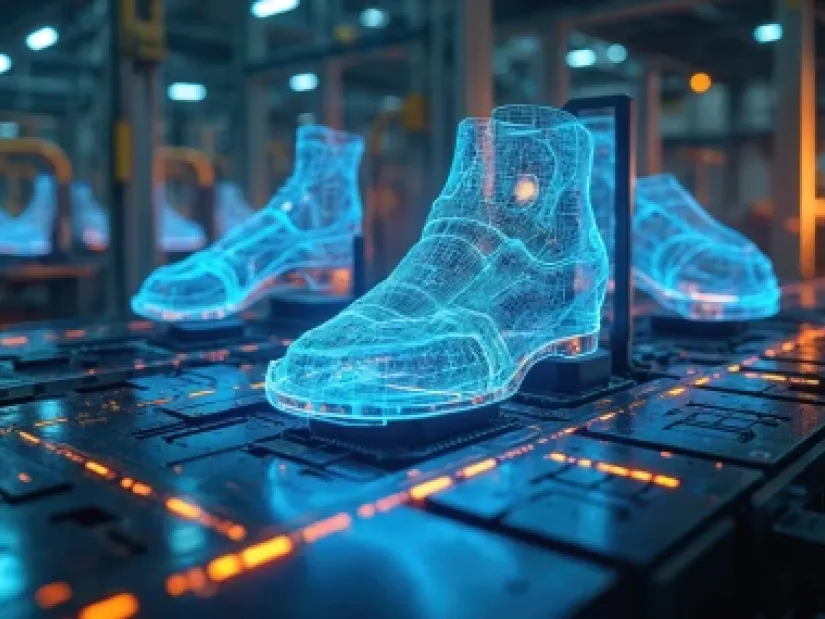
AI-powered digital twins and simulation tools that enable automated and dynamic product lifecycle management help designers model the entire lifecycle and predict environmental impact. Such tools provide feedback on the environmental footprint of design choices and facilitate data-driven decision-making to minimize negative impacts across the value chain.
Generative Design
AI algorithms have the potential to explore infinite design permutations within specified constraints to generate various options that are inherently more sustainable.

Integrated Carbon Accounting
AI platforms can help companies calculate a product’s carbon footprint at a granular level, enabling them to set eco-design strategies, take early design decisions with a focus on value and cost, and increase efficiency and transparency across the value chain.
Ready to Go Deeper?
The majority of the industry still perceives sustainable design aspects as independent of product performance or cost, when in fact sustainable design, when done right, can enable performance, supply chain resilience, and cost too.
Challenges of Implementing AI in Design and Manufacturing
Despite a promising 39% of design and manufacturing companies that use AI, there are myriad barriers that hinder its widespread adoption in product development.

Consumer Confusion and Consciousness
Consumer interest may be on the rise, but there is limited willingness to pay premium prices for sustainably developed products. Greenwashing and conflicting information can overwhelm and confuse consumers further.

Lack of Regulatory Pressure
Regulations around AI use are still evolving and there is little pressure to comply. This keeps sustainable products as an option rather than an imperative.

The biggest barrier is that it's still perfectly acceptable to sell a product or service that has avoidable environmental impacts. It's not an imperative.

Talent Shortage and Skills Gap
The skills gap is a major hurdle for adopting AI in sustainable product development. Domain experts often lack data-science skills or environmental knowledge.

Lack of Standardized Metrics
Many companies lack quantifiable measures to track progress toward sustainability goals.
Sustainability is the Only Future Strategy
For enterprises today, the ultimate goal should be to build products that are better for the environment without sacrificing quality or performance. Embracing AI for sustainability can accelerate timelines and lower costs—leading to more satisfied end users. Companies that can quickly adopt AI will drive innovation that benefits both the bottom line and this planet.
You can use AI to take multiple concepts and link them with simulation tools, a material database, and a carbon calculator to tell you which design iteration is the best and what modifications you might want to make