

Scale at Speed™






 English (Global)
 French (Canada)

- A recall is issued when a manufacturer or a safety authority determines that a vehicle defect is creating an unreasonable safety risk or fails to meet minimum safety standards
- There is now a significant rise in vehicle recalls, driven primarily by electronic system faults and software issues, with physical component failures following
- Digital Recall management solution help automotive companies to avoid significant penalties from national or regional transport authorities with proactive issue identification and higher recall completion rates
Why are Recalls a Serious Issue?
A recall is issued when a manufacturer or a safety authority determines that a vehicle defect is creating an unreasonable safety risk or fails to meet minimum safety standards.
Automotive companies face stringent performance obligations and compliance requirements imposed by regulatory bodies across regions. Adhering to these industry standards is crucial for maintaining brand reputation, occupant safety, operational efficiency, and customer satisfaction. Compliance ensures that automotive manufacturers can continue their operations without interruptions and deliver safe, defect-free vehicles.
According to NHTSA-USA, in 2025, 997 safety recalls were issued for vehicles and vehicle equipment, including tires and car seats. More than 29 million vehicles were recalled in 2025, underscoring the importance of checking for recalls and completing necessary repairs.1
Leading global vehicle safety standards include the UNECE regulations, which cover basic safety aspects such as frontal and side impacts, and the US Federal Motor Vehicle Safety Standards (FMVSS), which set requirements for equipment and performance. ISO standards like ISO 26262 (functional safety) and ISO/SAE 21434 (cybersecurity) are crucial for managing risks in electrical/electronic and digital systems. Regional regulations, such as the EU's General Safety Regulation (GSR), mandate advanced safety features and are adopted by many countries.
Modern vehicles are becoming increasingly complex as new technologies emerge, requiring more comprehensive testing protocols to ensure safety and reliability. There is now a significant rise in vehicle recalls, driven primarily by electronic system faults and software issues, with physical component failures following. Now, with an increasing number of recalls, the number of affected vehicles is growing significantly. A more serious issue is the recall completion rate, which has remained low with an estimated 38% light vehicles (weighted annual recall completion rates for recalls between 2018 – 2022) on US roads having open recalls. This may increase the risk of accidents that cause injuries, deaths, and property damage.
There is now a significant rise in vehicle recalls, driven primarily by electronic system faults and software issues, with physical component failures following.
Many reputable automotive companies may face significant penalties from national or regional transport authorities for delays in addressing issues or low recall completion rates. The automotive industry needs to address this problem as a priority, and this is now possible with advances in digital tools and technologies.
The Digital Solution and Role of AI
The objective of the vehicle safety and recall management solution for the automotive industry is to proactively identify potential safety issues before they lead to accidents or harm. With advances in AI technology, an end-to-end vehicle recall platform can help OEMs address challenges and ensure customer safety. Based on real-time analysis of vehicle health alerts and warranty claim data, potential safety issues are identified and monitored to arrive at recall decisions. The recall decisions are then formally notified to government agencies and vehicle owners. The corrective repair process is then handled at dealerships and tracked to ensure timely completion and a higher completion rate.
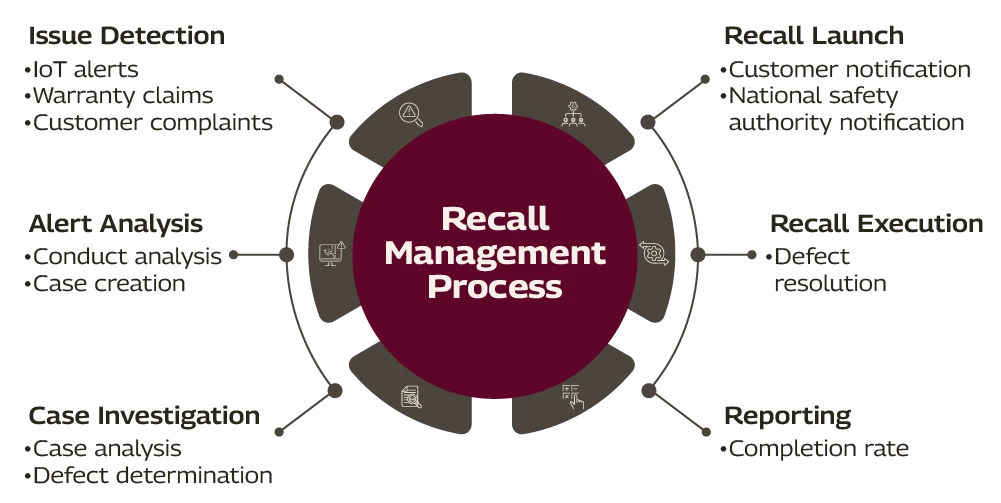
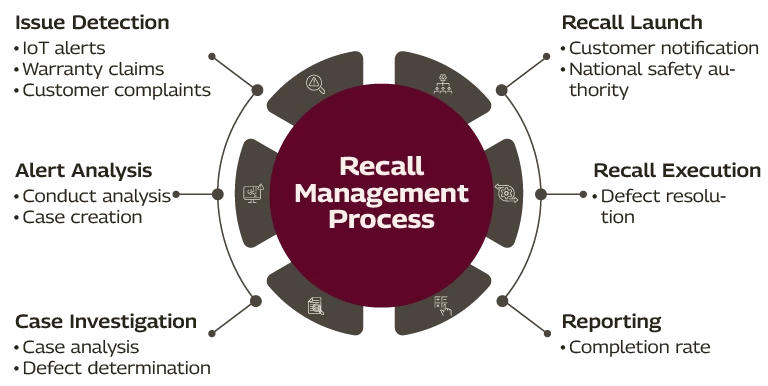
Fig 1: High level view of recall management process
AI plays a vital role in identifying safety issues using vehicle telematics data, warranty claims data, field failure reports, technical cases, and other sources.
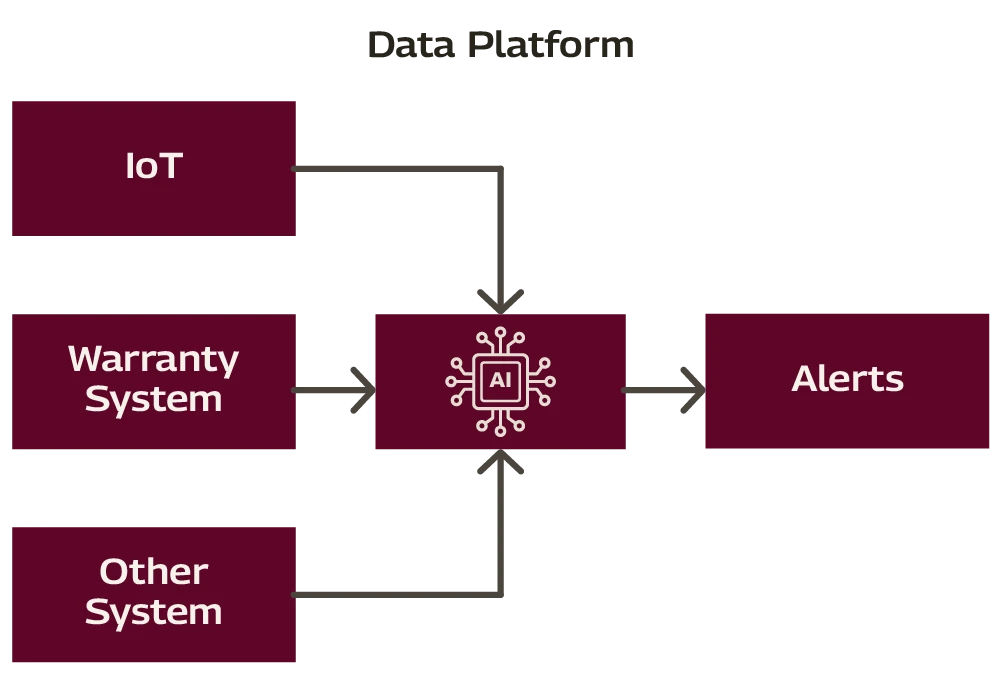
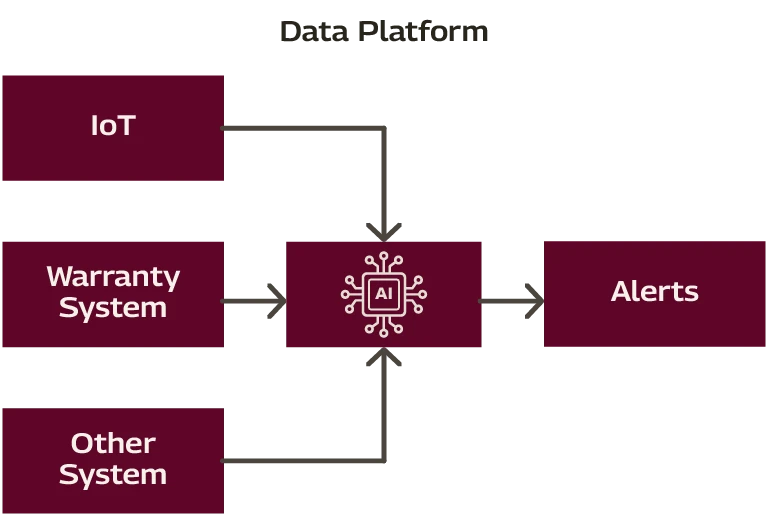
Fig 2: AI for safety issue identification
With advances in AI technology, an end-to-end vehicle recall platform can help OEMs address challenges and ensure customer safety.
How Can Tech Mahindra Help?
We have developed and implemented an end-to-end vehicle recall platform solution leveraging analytics, AI/ML, and workflow automation. The platform collects safety alerts from multiple sources, analyzes them to detect issues, and processes them through case management solutions to improve process efficiency and tracking.
This solution has resulted in multiple benefits, such as:
- Improved Operational Efficiency: Our streamlined workflows and automated processes have significantly accelerated issue detection and resolution, reducing operational bottlenecks that impact cycle time and productivity
- Increased Customer Satisfaction: With enhanced customer care capabilities, including omnichannel engagement and AI-driven support, we have elevated customer experiences to new heights with higher CSAT/NPS and higher first-contact resolution percentage
- Cost Reductions: Our solution has led to substantial savings in warranty processing costs and time, resulting in higher operational efficiency with lower cost per recall and warranty processing time
- Regulatory Compliance: Our solution ensures strict adherence to safety and recall regulations, minimizing the risk of penalties through timely and accurate reporting, resulting in a lower audit score
- Data-Driven Insights: By integrating data analytics with AI, we provide valuable insights into operational performance, aiding in informed decision-making and continuous process improvement
Connect with us today to transform your vehicle safety and recall management.
TAGS:
Artificial Intelligence
Consulting and Management Services
Manufacturing
Frequently Asked Questions
Our FAQ section is designed to guide you through the most common topics and concerns.
It means a manufacturer has identified a defect that could affect safety and needs to fix it to meet regulatory and safety requirements.
Vehicles now rely heavily on software and electronics. While this brings innovation, it also increases the chances of system‑level issues that weren’t common earlier.
The biggest gap is getting vehicles back on the road for repairs. Many recalls remain open because customers aren’t reached in a timely manner, or the process lacks tracking and follow‑through.
By using data from vehicles, service networks, and customer interactions, technology helps identify issues earlier and manage recalls more effectively and promptly.
We enable OEMs manage recalls end-to-end from early issue detection through execution and reporting—using digital platforms that improve speed, visibility, and compliance.
