

Scale at Speed™







 English (Global)
 French (Canada)

- AI-powered recommendations and searches are critical for enhancing revenue and boosting audience engagement. But most organizations lack control as they rely on third-party vendors or platforms
- Dependence on third-party AI capabilities makes media companies vulnerable to regulatory, commercial, and operational risks that they cannot fully control.
- A key differentiator for many streaming and publishing platforms is their recommendation engines, metadata, and content indexing.
- With regulatory bodies increasingly scrutinizing, it has become a strategic mandate to gain ownership of data, models, and infrastructure.
- AI sovereignty is about ownership of vital assets such as models, data, and indexing, without needing to build from the source.
I have seen many streaming or publishing businesses maintain business continuity; meaning their subscribers are engaged, content library keeps becoming stronger, earning margins get higher, and subscriptions continue to increase steadily. But regulatory compliance requirements around Data & AI sovereignty can change overnight, and to ensure compliance third-party recommendation engines driving discovery and engagement may suddenly cease to operate in certain regions. A situation that is entirely out of the control of any company.
This is a telling moment on the implications of relying on third-party AI capability.
The Risk of Dependency
Media companies are increasingly dependent on third-party AI-based recommendations for their most critical functions, including indexing, tagging, and searching their own content archives. From a traditional build-versus-rent perspective, renting was the logical choice, as it offered easy, rapid deployment, whereas building the same AI capabilities from scratch diverted the enterprise's focus and resources from creating consumable content. This is now a red flag that requires immediate strategic attention from the boardroom.
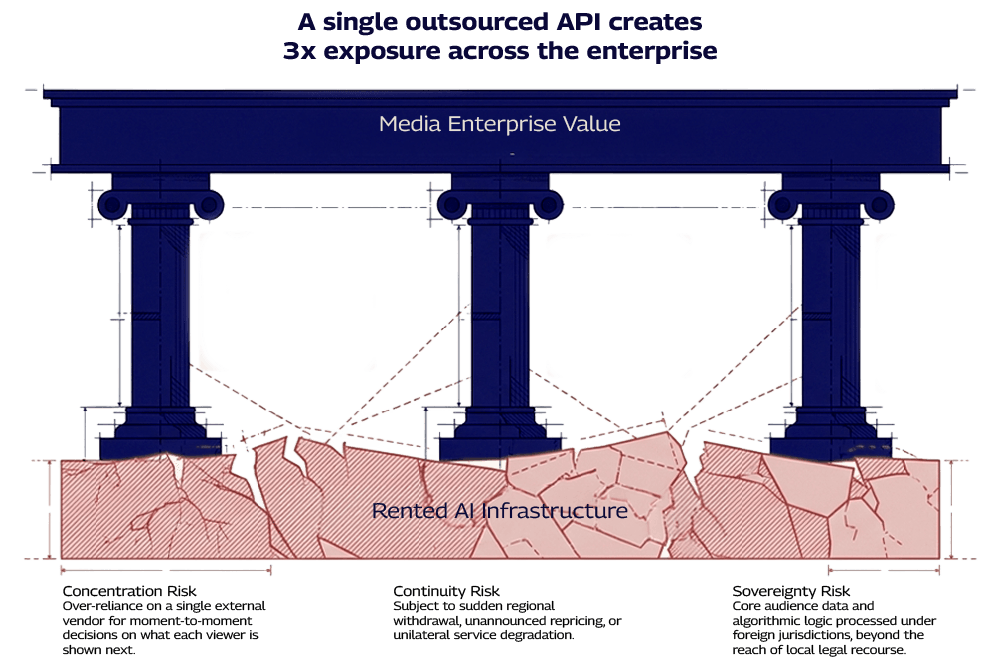
Figure 01: Rent AI Infrastructure
The Case Against Renting the Moat
Most successful media businesses treat their audience data, recommendations, and personalization as their most crucial asset. This is why they prefer to own their AI capabilities rather than rent them from a third-party vendor. Over time, these capabilities understand audience behavior, preferences, and content consumption patterns, keeping subscribers engaged each year and reducing churn. Thus, creating a pattern that is difficult for competitors to replicate.
That said, media houses create a taxonomy that makes a catalog searchable, the metadata that retrieves relevant information at the right time, and over several years create a deep institutional knowledge that are extremely valuable assets. When these capabilities are entrusted to third parties, they create dependency risks when they are repriced, restricted, or withdrawn.
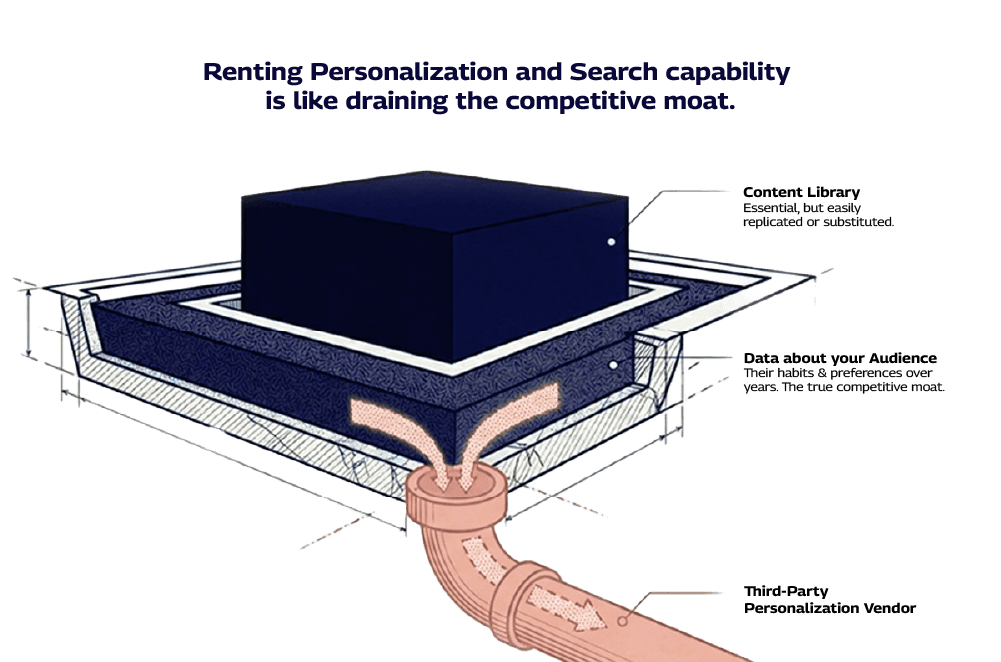
Figure 02: The Roadblock in renting personalization and search capabilities
A Global Exposure, Sharpened by Regulation
Governments are now regulating data, content, and AI, ensuring that it is legal compliance and not just a business mandate. Countries like Australia and New Zealand, which are considered smaller markets, also depend on global platforms to conform to local rules and bring their critical systems under their own control before regulations become stricter elsewhere.
AI Sovereignty Does Not Require Building in Isolation
Ownership of AI capabilities does not always mean building it in-house. Instead, it simply means controlling what the most crucial components, such as data, model weight, and indexing, while continuing to partner with the third-party vendor to develop AI systems. This way, enterprises do not rely entirely on rented platforms without full control.
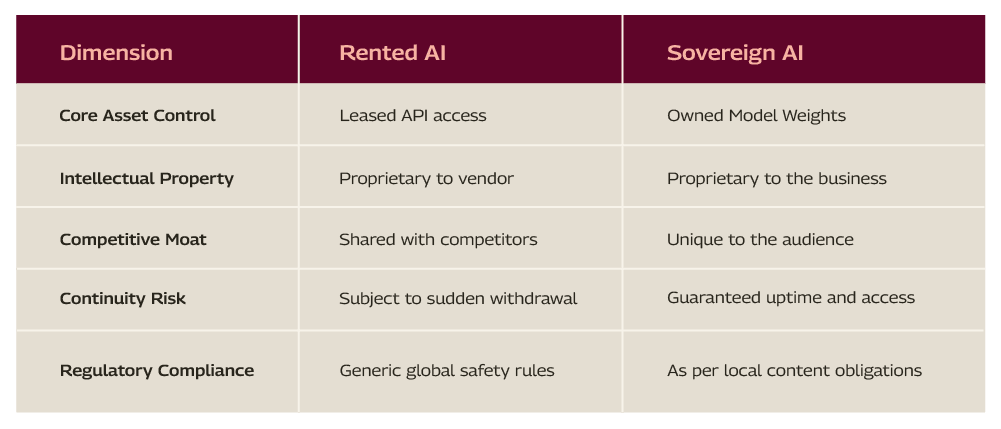
Figure 03: Difference between rented platforms vs. sovereign AI
Today, media enterprises can build their own foundation model that is trained on proprietary data and is customized to understand audience behavior, recommendations, and search layers. This is completed at a fraction of the cost and with minimal risk. These capabilities also enable greater ownership of how content is discovered and consumed.
Tech Mahindra helps media companies modernize their data infrastructure and develop foundation models that shape what their audiences see, search for, and engage with.
Conclusion
Where do our recommendations, searches, and indexing systems run today, and who controls them? What would happen to the business if access was ceased? Who owns the models, the index, and the underlying data? Are the three important questions that companies must answer with a ‘we’ to continue to have audiences for years from now.
Agentic AI shifts the enterprise from task automation to orchestrated workflows that learn, adapt, and compound value.
TAGS:
Artificial Intelligence
Data Analytics
Media & Entertainment
Frequently Asked Questions
Our FAQ section is designed to guide you through the most common topics and concerns.
AI sovereignty is about having control over what drives audience engagement. It means owning the models, data, and indexing systems that decide what users see and discover. From an ART + ALGORITHMS perspective, sovereignty ensures an organization's creative output is guided by its owned intelligence — and not rented.
Because it directly shapes revenue. Recommendations and search determine content discovery, engagement time, and monetization outcomes. Yet many of these systems run on third-party platforms i.e the core decisioning layer of the business sits outside the business. This creates unnecessary exposure—limited control, commercial dependency, and regulatory risk.
Yes—because a media company doesn't need to have large teams of AI engineers to build everything. The priority is to own the models, index, and proprietary data while leveraging partners to build and deploy. Today, this can even be done frugally and at a far lower cost than is hyped.
Through a phased transition, first map current dependencies across recommendation, search, and indexing. Then prioritize the layers closest to revenue. Build parallel, owned capabilities using first-party audience data and gradually shift control. This ensures continuity as we move toward a sovereign AI core.