


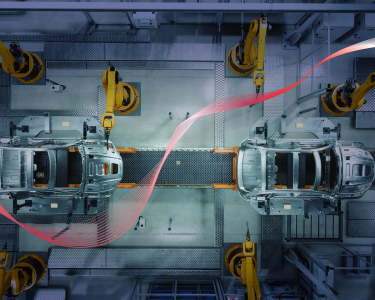





While North America is already a mature market for heavy commercial vehicles (HCVs), it is still evolving. North American countries, particularly the US and Canada, have stricter vehicle safety regulations, thereby mandating advanced safety features across all automotive original equipment manufacturers (OEMs). Further, rising road accidents have accelerated the adoption of advanced safety systems that either minimize the chances of an accident or reduce the effects of a collision on vehicle occupants.
Regulatory bodies such as the National Highway Traffic Safety Administration (NHTSA) in the US and Transport Canada (TC) in Canada have been involved in improving automotive safety for decades. These agencies define and enforce safety standards and develop innovative approaches to vehicle safety. Over the past five decades, this regulatory focus has delivered measurable improvements in the US, with traffic fatalities declining from more than 52,000 in 1970 to about 36,000 in 2019,1despite a significant increase in the number of vehicles on the road.
Safety Recalls: A High-Stakes Obligation for HCV Manufacturers
As regulatory expectations rise, safety recalls have become one of the most consequential obligations for HCV manufacturers. A recall is initiated when a manufacturer or regulatory authority determines that a vehicle, component, or approved accessory fails to meet mandated safety standards or poses a potential risk to users.
In the North American Market (NAM), such recalls carry significant consequences, extending beyond regulatory compliance to include substantial financial penalties and long-term impact on brand credibility. More critically, delays in notifying the affected customers about a potential safety-related issue in their purchased vehicles could result in additional casualties and increased trauma to end-users2.
Additionally, the growing reliance on electronic and software-driven systems has expanded the potential risk surface for failures, necessitating a more sophisticated and efficient approach to recalls. This shift demands an enhanced focus on ensuring safety, reliability, and regulatory compliance. According to NHTSA, while the number of safety product recalls declined in 2023 compared to 2022, the total number of vehicles recalled increased. In effect, recall frequency is down, but severity is rising3.
As a basic rule of thumb, every manufacturer has the utmost chance to mitigate product recall-related risks by strengthening internal processes. However, this is easier said than done, considering my experience with a handful of companies within the NAM trucking industry. This is because, although each HCV sold in the region has a digitally retrievable Bill of Materials (BoM), the customers cater to, come from a diverse set of vocations and use these products as equipment across a myriad of applications. As a result, these commercial vehicles have an indefinite number of permutations and combinations that need to be accounted for whilst curating a wide variety of data points reported for them through various sources in the field.
For instance, even when trucks belong to the same model line from a specific OEM and share similar drivetrains and body types, monitoring safety data across these vehicles is rarely simple. Grouping them into cohorts becomes even more difficult due to differences in part numbers, software versions, and the digital maturity of onboard safety and diagnostic systems deployed across individual vehicles.
Furthermore, differences in mileage, operating hours, generational differences in their software-defined features, warranty terms, service coverage, and annual maintenance contracts (AMCs) add to this complexity. All of this becomes more challenging when it comes to collating safety data. The data collected must convince the OEMs/regulators of the existence/absence of a threat to the well-being of the human personnel from a particular truck variant under the lens.
Why OEMs are Turning to Advanced Safety Data Analytics
For these reasons, OEMs are increasingly adopting advanced IT solutions to meet their legally mandated responsibilities. In order to do that, they are rooting for a flexible, interoperable, and scalable safety analytics platform that could be integrated with the entire gamut of operational data. This includes pooling data from connected vehicles, warranty claims, textual notes from technicians, or even a transcript of a phone call from a concerned customer. The process of any such data elements archives the processed data akin to a sleek data-warehousing tool, and on top of it, provides them with meaningful trends, pre-defined alerts, plus actionable insights for determining whether any of their variants seem to be falling into a behavior that could warrant a recall. Further, vehicle companies are also eager for technologies that are low-code or no-code, open to natural prompting (i.e., GenAI-ready), and infused with AI-driven capabilities.
Tech Mahindra (TechM) has established a dedicated Warranty Analytics Center of Excellence (CoE) as part of its Automotive Aftermarkets Practice to cater to a related set of initiatives. Through this CoE, we have experimented with an array of solutions to address the burgeoning industry problem in the realm of safety data monitoring. Kindly reach out to us to learn more about this offering and how it can be tailored to your unique needs.
Conclusion
The HCV industry in North America is faced with a significant number of challenges related to safety recalls, including high recall rates, complex logistics, and their inescapable impact on brand reputation. These are exacerbated by the ever-evolving complexity of HCVs, especially given the modern trend of advanced driver-assistance systems (ADAS) and software-driven features.
When it comes to new-age initiatives to counter these, OEMs are demanding a sophisticated Safety Data Analytics (SDA) platform that could achieve outcomes that go far beyond mere efficiency gains associated with their legacy IT systems. However, building such an IT platform will not only demand additional investments but could also require HCV players to develop robust change management capabilities and foster a data-driven safety culture in their organizations, alongside ramping up collaboration with regulators and customers alike.
Resources:
- National Highway Traffic Safety Administration, part of the U.S. Department of Transportation. (2020). Traffic Safety: Then, Now and the Future.
- IQUW. (2024, Nov. 13). Smarter Cars: Understanding how changes in car manufacturing challenges the product recall market.
- ResearchGate. (Dec. 2013). Trend Analysis of Car Recalls: Evidence from the US Market.