

Scale at Speed™







 English (Global)
 French (Canada)

- Performance constraints in enterprise operations often originate at the database layer. Scaling infrastructure or modernizing applications is not always a viable fix.
- Database optimization offers a more practical path. Targeted improvements can enhance performance and efficiency.
- AI-driven database optimization is emerging as the new frontier, enabling continuous, adaptive tuning in real time.
- Tech Mahindra’s data and analytics services help enterprises unlock new levels of performance, efficiency, and resilience through next-gen data optimization.
Rethinking Performance at the Core
Most companies in today’s digital race have got it completely wrong. The biggest performance gains in operations don’t come from adding more infrastructure or rebuilding applications. But rather, it comes from something often overlooked: the database. When left unoptimized, a database can be the biggest resource bleed to enterprises.
In a world where speed and efficiency are everything, whether it's booking flights, checking bank balances, or streaming shows, databases are the quiet engines making it all possible. Hence, smart database optimization can be a strategic lever for performance gains and cost savings.
Why Optimization Matters?
Teams tend to look at database performance only after systems slow down or costs begin to climb. By then, the impact is already in motion. Applications lag, cloud spend increases due to overprovisioning, and teams get pulled into troubleshooting instead of focusing on innovation. Addressing these issues does not require large or disruptive changes. Small, targeted improvements can enhance speed, reduce resource use, and keep systems efficient.
A Practical Approach to Database Optimization
Rebuilding from scratch may seem like the right approach. In practice, it’s expensive, risky, and rarely necessary. A more effective approach to database optimization is improving what's already in place. By making incremental enhancements, enterprises can achieve performance gains without major disruptions, and this applies across all major cloud platforms.
Here's a three-step approach to resolving performance gaps:
- Deep dive analysis examines workload patterns, memory usage, and cache behavior to identify the precise bottlenecks holding systems back.
- Smart parameter tuning of key settings such as innodb_buffer_pool_size, query_cache_size, and max_connections significantly improves performance.
- Rigorous benchmarking using tools like HammerDB can quantify the impact of tuning, and metrics such as transactions per minute (TPM) and new orders per minute (NOPM) provide clear evidence of performance improvements.
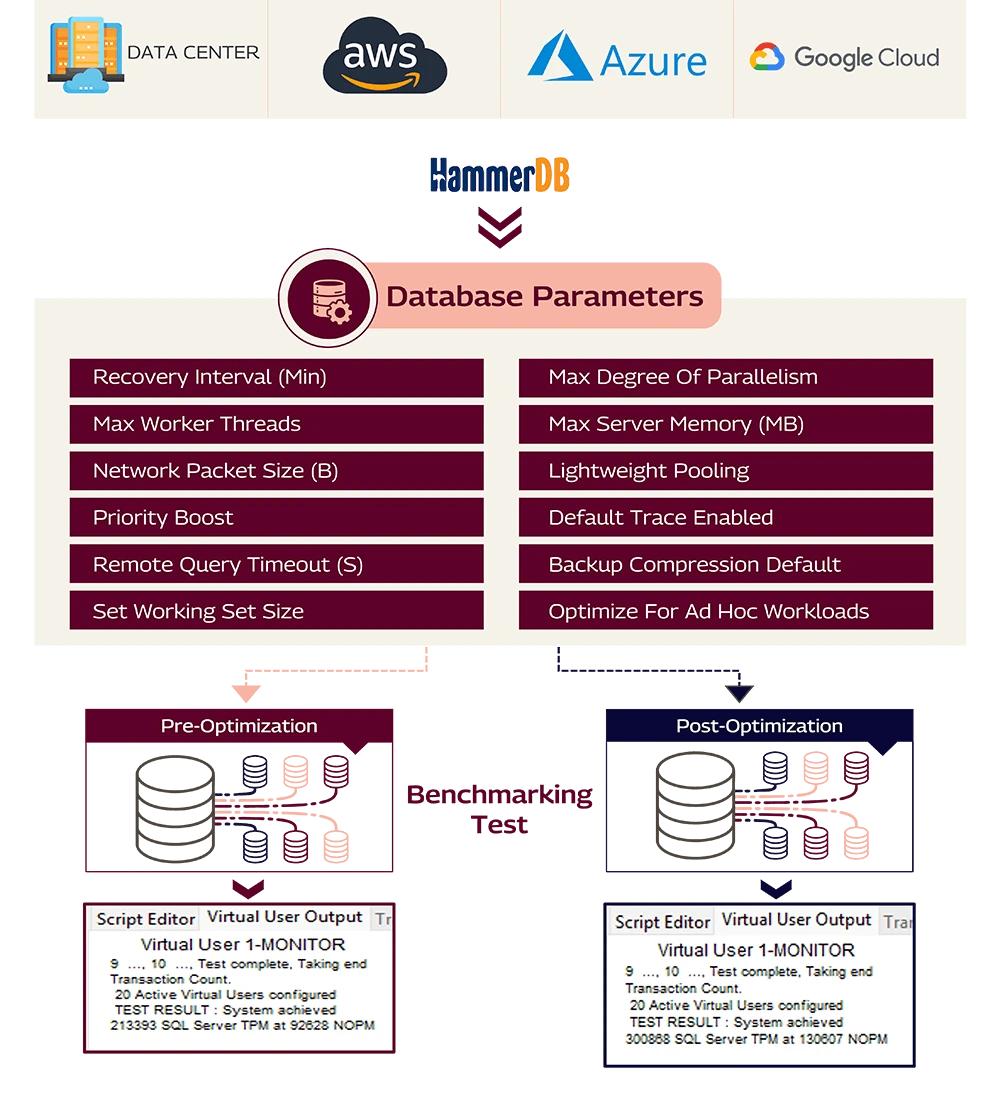
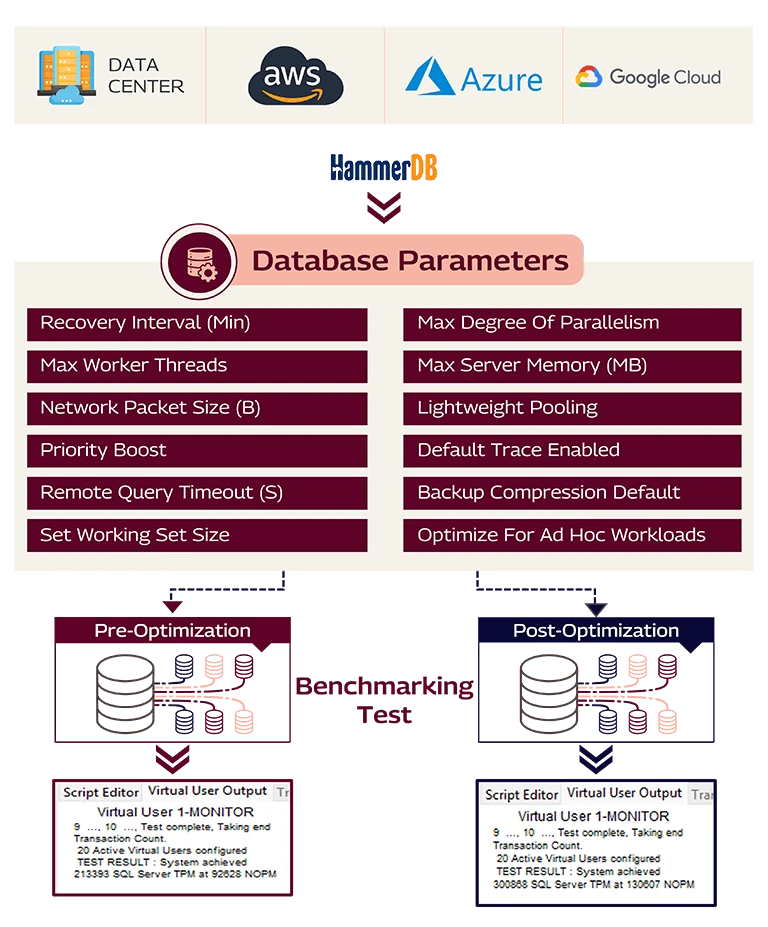
Figure 1: The Database Optimization Process
Incremental tuning can improve database performance without starting over.
Tech Mahindra's Impact: A Retail Success Story
A leading retailer experienced slow response times and rising cloud costs during peak shopping seasons. Instead of investing in infrastructure modernization, we applied a focused database tuning strategy that resulted in:
- 25% improvement in query response times
- 15% infrastructure cost reduction
- Minimal disruption and downtime during and after the implementation
This is the power of targeted optimization: quick performance improvement and long-term efficiency.
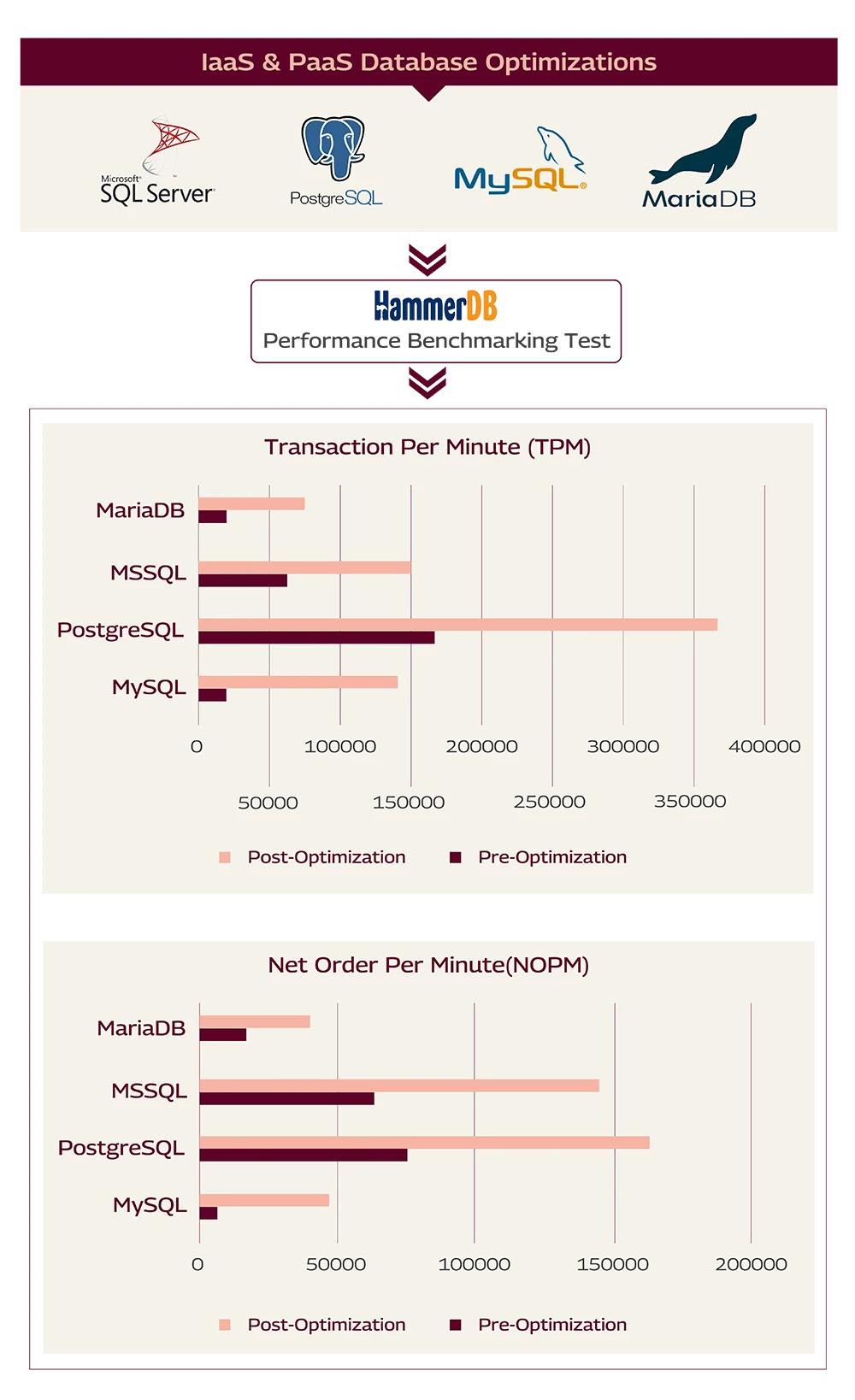
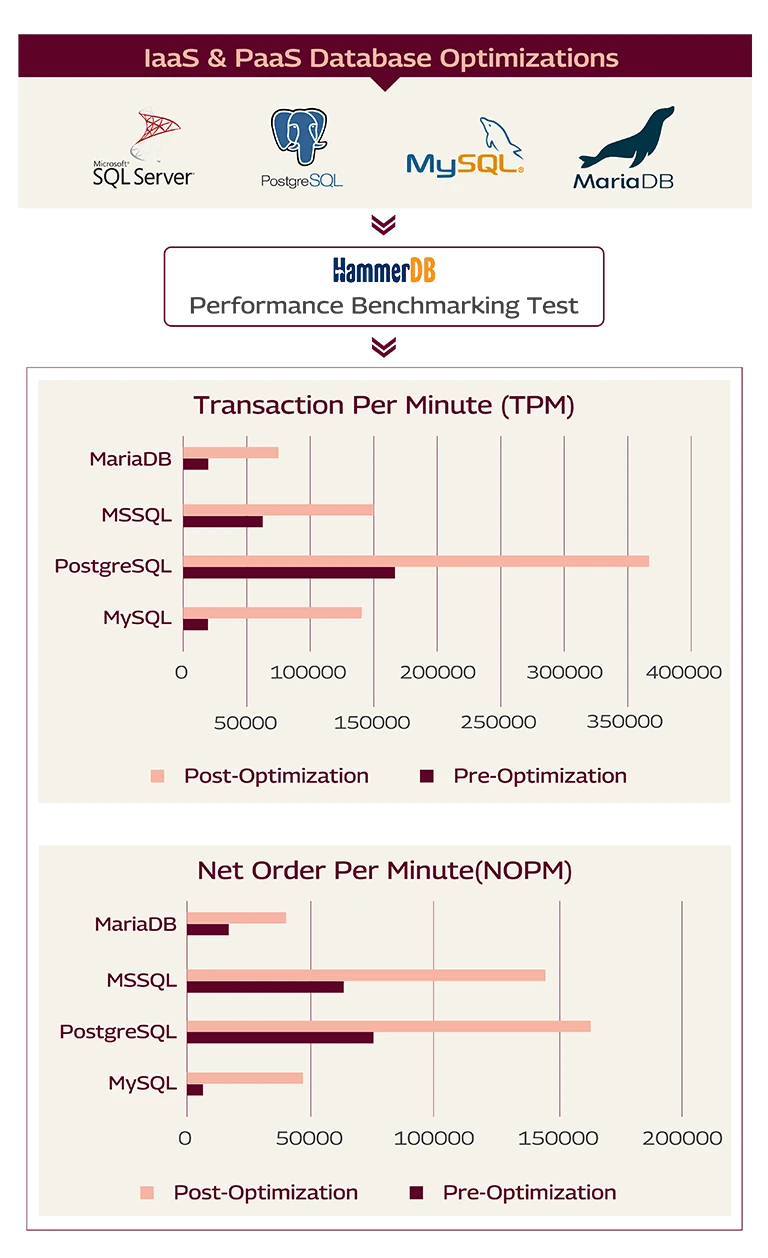
Figure 2: Post-optimization Improvement
The Shift to AI-Driven Optimization
AI-enabled database optimization is central to enterprise performance. At Tech Mahindra, we use machine learning and predictive modeling to improve how databases are tuned and managed. The following capabilities support this approach.
- Workload and Environment Discovery: Automatically analyzes workload patterns, infrastructure topology, database metrics, and application behavior.
- Intelligent Performance Baseline Creation: Establishes dynamic performance baselines using benchmarking and historical data.
- Predictive Modelling and Forecasting: Anticipates performance bottlenecks, cost spikes, and capacity risks before they occur.
- Automated Configuration Recommendation: Suggests optimal database parameters, indexing strategies, compute sizing, and storage tuning tailored to the workload.
- Validation Through Automated Benchmarking: Safely tests recommendations in controlled environments and validates improvements through measurable performance gains.
- Continuous Learning and Adaptive Optimization: The system learns from new workload patterns and automatically refines optimization strategies over time.
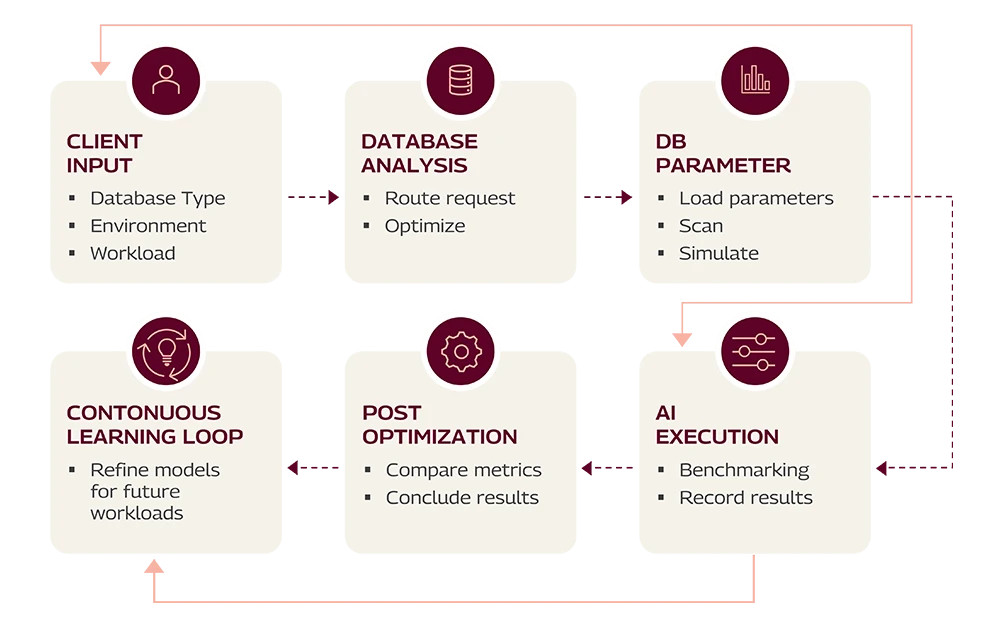
Figure 3: Six steps of AI-Powered Database Optimization
The Final Note
Database optimization is no longer a one-time technical exercise; it’s an ongoing effort to create better user experiences, reduce operational costs, and build systems that can withstand future demands. As enterprises face a new wave of operational requirements, software tuning, especially through database optimization, plays a critical role in overcoming performance constraints and unlocking new possibilities.
The future of enterprise performance is driven by effective data optimization. Where does your organization stand?
TAGS:
Artificial Intelligence
Data Analytics
Frequently Asked Questions
Our FAQ section is designed to guide you through the most common topics and concerns.
Databases handle core processes and data access for applications. When poorly tuned, they consume excessive resources, slow query execution, and force infrastructure overprovisioning. These issues can degrade application responsiveness even if compute or application layers are modernized.
No. Rebuilding or re‑architecting applications is expensive and risky. Incremental database optimization, such as tuning configurations and improving resource utilization, can deliver measurable performance improvements without major architectural changes.
Optimization typically includes workload analysis, memory and cache tuning, and adjusting database parameters. These targeted changes aim to reduce latency, improve throughput, and increase efficiency while maintaining system stability.
Effectiveness is measured through benchmarking tools and performance metrics. Metrics such as transactions per minute (TPM) and new orders per minute (NOPM) are used to quantify performance before and after tuning activities.
AI enables continuous and adaptive optimization by learning workload patterns, predicting bottlenecks, recommending configuration changes, and validating improvements through automated benchmarking. This allows databases to adjust dynamically as workloads evolve.
