

Scale at Speed™







 English (Global)
 French (Canada)

- Telecom is evolving from connectivity providers to intelligence-led ecosystems powered by AI across operations and services.
- AI use cases span the value chain, from personalized customer engagement to automated network operations and real-time security.
- Scaling AI requires strong data foundations, modern architecture, and governance to move beyond isolated pilots.
- Realizing value depends on aligning AI with business outcomes and embedding it across workflows and workforce capabilities.
The Shift to Intelligence-led Telecom Ecosystems
Telecom is moving beyond connectivity into intelligence-led ecosystems. The role of AI is not merely about enhancing operations but about redefining how communications service providers (CSPs) design services, engage customers, and monetize infrastructure. In alignment with TM Forum's AI-driven Telco, CSPs are reimagining their architectures to provide modular software platforms that unlock spectrum of possibilities.
In recent years, AI has been fuelled by advancements and has rapidly evolved as a field that encompasses a variety of techniques and approaches to create intelligent systems capable of performing tasks that typically require human intelligence:
- Natural Language Processing: Enables computers to recognize, understand, and generate text and speech
- Computer Vision: Equips computers to interpret and understand visuals such as images and videos
- Predictive Analytics: Allows for predictions based on historical data, statistical modelling, data mining, and machine learning
- GenAI: Focuses on creating new content, such as images, text, code, simulations, and audio, among others
- Agentic AI: Enables AI systems to perform autonomous actions, make decisions, and execute tasks with minimal human intervention
AI Imperatives for Modern Telcos
To transform into an AI-driven telco, CSPs must focus on a centralized AI strategy and a clear, value-based prioritization model. Together, these enable the implementation of a roadmap to grow revenue streams, empower the workforce and customers, and transform the business's core operational backbone.
Equally important are workforce capabilities and responsible AI principles. Together, these enable the effective implementation and scaling of use cases that achieve the key imperatives outlined below:
Four Imperatives Driving AI-Led Telecom Transformation
| Transform Customer Experience | AI is reshaping the telco customer experience by enabling proactive, personalized support through predictive analytics & real-time insights. Natural language technologies are transforming digital service delivery, empowering intelligent virtual assistants & conversational interfaces to provide intuitive, human-like interactions. Collectively, such innovations are driving a shift toward a fully autonomous, proactive, & seamless omnichannel service model. |
| Drive Growth | AI is driving telco growth by unlocking new revenue streams through personalized offerings and intelligent service bundling. GenAI & Agentic AI further boosts sales and personalization, improving customer engagement & conversion with potential opportunities through offering AI infrastructure and AI-as-a-Service. |
| Reduce Operational Costs | AI-driven automation of business, network and technology plays a significant role in reducing operational costs; like automation of routine tasks across customer support, network operations, and back-office processes. Predictive maintenance & AI-based resource optimization help prevent costly outages, reduce energy consumption & improve workforce & infrastructure utilization. |
| Secure & Reliable | AI enables telcos to maintain secure and reliable operations by monitoring networks in real time, detecting threats, and preventing failures. Predictive maintenance optimizes infrastructure performance, while AI-driven automation enforces security protocols and compliance. Intelligent analytics support rapid incident response and fraud prevention. |
Let’s dive deeper into the key industry imperatives: transforming the customer experience, driving growth, reducing operational costs, and ensuring secure, reliable operations.
Transform Customer Experience
Customers of a CSP often cite inconsistent cross-channel experiences, with just one in three staying with their provider for more than five years. Customer experience is a key focus for AI, aimed at differentiating services, improving the customer lifecycle, and curbing revenue decline. Traditional AI enhances interactions by analyzing user data to recommend next-best actions, match offers, and guide agents.
At the same time, GenAI introduces natural-language conversational agents and AI retail assistants that deliver human-like, context-aware experiences. Agentic AI further extends these capabilities by enabling systems to autonomously take action, make decisions, and execute tasks on behalf of customers, driving seamless, proactive service. With intelligent automation and unified data foundations, the contact centre can evolve from a transactional cost centre into a proactive, predictive, omnichannel service hub. Always-on digital companions provide 24/7 service, seamlessly escalating complex issues to human agents when required, transforming customer experience and loyalty.
| KPI | Benefit Range |
| Cost-to-Serve | 20-40% service cost reduction |
| Average Handling Time (AHT) | 20-40% reduction in average handling time |
| First Contact Resolution (FCR) | 20-50% improvement in FCR |
Drive Business Growth
As CSP revenues face compression and enterprise value pressures, AI is emerging as a key driver of growth. In B2C, GenAI enables highly personalized marketing campaigns and customer journeys through predictive models that anticipate individual behaviour, improving purchase propensity, churn prediction, granular segmentation, strategic bundling of communication and digital products, and dynamic pricing.
In B2B, CSPs are moving up the value chain by monetizing infrastructure – offering cloud, edge compute, GPU-backed AI hosting, and turnkey ICT solutions to enterprises. By productizing AI, CSPs can transform into TechCos – technology-centric providers that industrialize and scale advanced digital services beyond connectivity. AI further enables configurable B2B service suites, such as chatbots, security solutions, and analytics, tailored through usage patterns and historical data. For consumers, GenAI optimizes real-time network performance, including 5G QoS and latency, enhancing streaming and interactive experiences. These capabilities increase customer satisfaction and unlock new revenue streams. Additionally, AI-as-a-Service offerings for SMBs and mid-market clients expand access to advanced automation and analytics, supporting growth across the full spectrum of telecom customers.
| KPI | Benefit Range |
| New business growth | 5-15% revenue |
| Churn Reduction | 5-15% churn reduction |
| Speed to Market | 20-40% faster time-to-market |
Reduce Operational Costs
CSPs face persistently high operating costs, with network operations projected to consume roughly half of OpEx. Traditional AI has already reduced costs through predictive maintenance, anomaly detection, and process optimization. At the same time, GenAI amplifies these gains by processing unstructured data and automating repetitive tasks, producing blueprints, test scripts, and standardized code to accelerate software and data delivery and reduce technical debt.
Agentic AI further transforms operations by autonomously executing multi-step workflows, adapting decisions in context, and driving real-time remediation across network and IT domains. Natural-language capabilities democratize data and knowledge, improving decision-making and enabling enterprise-wide automation. Traditional AI, GenAI, and agentic AI accelerate modernization, embed security by design, and materially improve service resilience and cost efficiency.
| KPI | Benefit Range |
| Opex reduction | 15-25% |
| Network Maintenance and repair costs | 20-30% cost reduction |
| Unplanned downtime | 30-40% fewer downtime incidents |
Secure and Reliable Operations
The evolving security landscape compels telcos to address both the opportunities and amplified threats introduced by AI. CSPs hold highly sensitive user data, location data, communications, and metadata that attract state-sponsored actors and cybercriminals, and GenAI can be weaponized to automate and scale the deployment of malicious code.
Mitigating these risks requires advanced AI capabilities, including agentic AI, to continuously analyze operational datasets, identify and prioritize vulnerabilities, detect incidents, and prevent fraud in real time. Agentic systems can autonomously triage events and execute mitigation workflows under human oversight, accelerating response while preserving control. When combined with secure-by-design engineering, rigorous governance, and human-in-the-loop controls, AI enables a proactive, scalable, and resilient security posture for telcos.
| KPI | Benefit Range |
| Reduction in breaches/incidents | 30-50% |
| Reduction in cost per breach | 25-40% |
| Accelerated detection and response time | 30-50% faster detection |
AI Adoption Across the Telecom Value Chain
Over the next 12-18 months, AI-driven solutions, including traditional AI, GenAI, and emerging agentic AI, will be significantly upscaled across all functions of the telecommunications industry. Adoption is accelerating rapidly, but maturity varies. Below are the near-term opportunities, highlighting illustrative use cases (not exhaustive) that demonstrate how autonomous agentic workflows, conversational GenAI, and established ML techniques can help CSPs advance the four strategic imperatives.
| Industry Imperatives | Sales and Marketing | Product and Service | Customer Service and Care | Network | Technology and Platform |
| Transform CX |
|
|
|
|
|
| Drive Business Growth |
|
|
|
|
|
| Reduce Operational Cost |
|
|
|
|
|
| Secure and Reliable Operations |
|
|
|
|
|
Tech Mahindra’s Strategic Focus on AI
Our focus on ‘AI delivered right’ exemplifies innovation and reliability. TechM moves beyond vision and experimentation to deliver practical, secure, scalable AI solutions. TechM Orion is our next-generation agentic AI platform, built on NVIDIA accelerated computing, that enables intelligent, autonomous execution of complex business workflows. With agents governed by dual-layer guardrails that monitor hallucinations, bias, and more, TechM Orion helps organizations enforce ethical AI practices, audit agent behaviors, and continuously improve the reliability of automated systems.
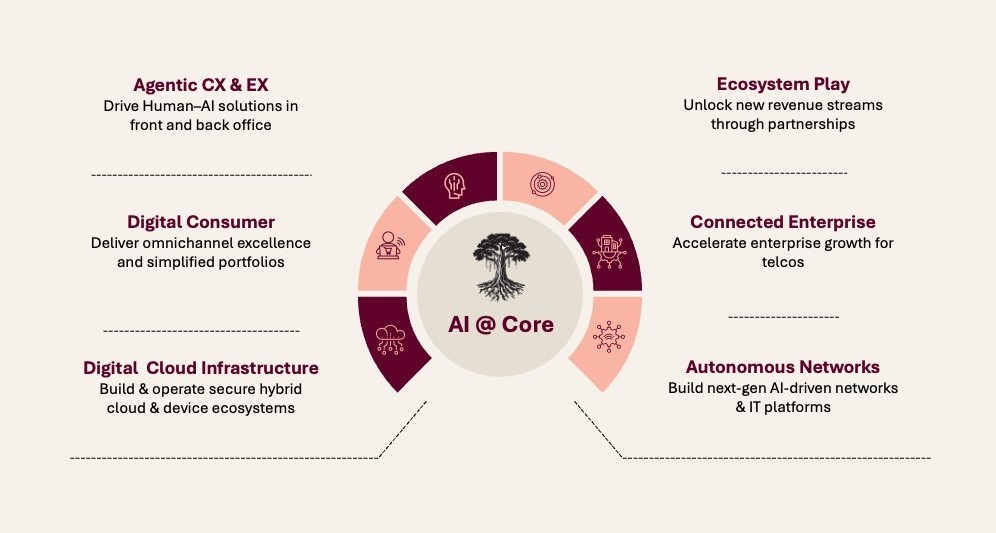
Figure 1: Modernize with Data Fabric and MCP Architecture
The Road to an AI-Native Telco
The integration of traditional AI, GenAI, and agentic AI is poised to transform telecommunications, establishing it as the digital backbone of the future economy. Telcos must define a clear strategic vision to prioritize investments and partnerships effectively, focusing on modern data architectures, automation, resilient cloud and edge platforms, and security by design. Expanding the partner ecosystem beyond OEMs to include cloud providers, AI innovators, industry-specific solution developers, and public-sector collaborators is essential. With our strategic focus, implementation experience, and an end-state AI-native telco vision, we can help CSPs unlock new levels of efficiency, intelligence, and scalability in their digital operations.
Partner with us to unlock AI’s full potential for your business from concept to completion.
TAGS:
Artificial Intelligence
Network Operations
Frequently Asked Questions
Our FAQ section is designed to guide you through the most common topics and concerns.
An AI-driven telco is a communications service provider that uses AI to redesign services, customer engagement, operations, and monetization models beyond basic connectivity.
The four main imperatives are transforming the customer experience, driving business growth, reducing operational costs, and ensuring secure, reliable operations.
AI can support next-best actions, personalized offers, conversational agents, proactive self-service, and contact center automation, improving service consistency and responsiveness.
AI helps through predictive maintenance, anomaly detection, automation of repetitive tasks, and autonomous workflows across the network and IT operations.
Telcos manage sensitive data and face rising AI-enabled threats, so secure-by-design engineering, governance, and human oversight are needed to detect risks and respond in real time.
