
Scale at Speed™






 English (Global)
 French (Canada)

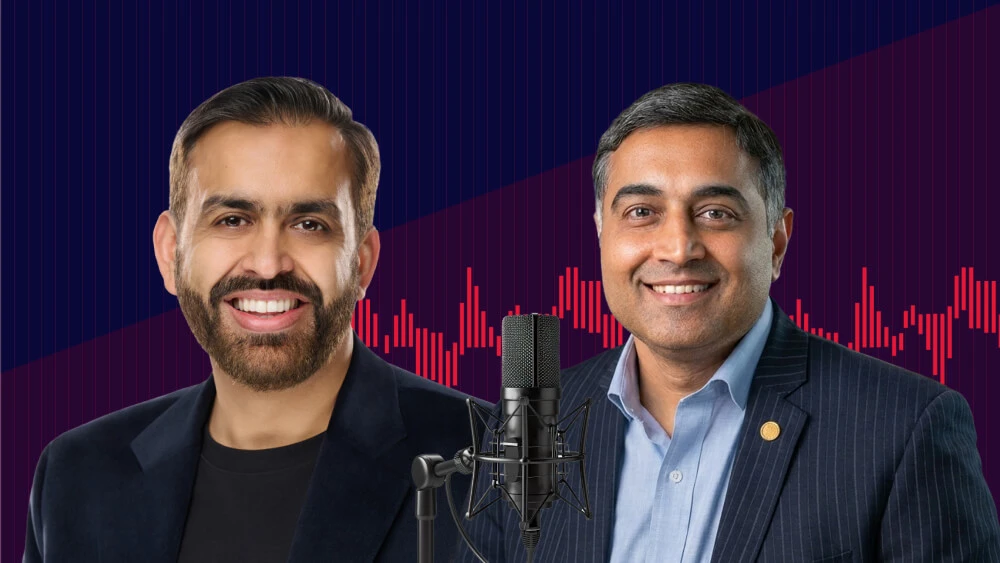
About This Episode
Most telcos are running hundreds of AI experiments yet very few can point to their P&L impact. The gap between the two is an operating model problem, and it is the central question of this conversation.
Usman Javaid took on the newly created role of Group Chief AI Officer at Orange in September 2026. His mandate is to build an AI-first telco across 130,000 employees, multiple countries, and a business with existing legacy costs.
He anchors the conversation in a distinction that reorients the discussion. Agentic AI is not a tool you bolt onto existing workflows. It is an operating system you are replacing. A tool serves a specific need. An operating system changes how the whole business runs; this includes its workflows, commercial models, and customer interactions. "You are building a coworker," he says. "You are building a work buddy." Once one can accept that, the entire approach to transformation changes.
On the industry debate between open-weight and frontier systems, Orange took its position early. It was among the first companies in the world to run an OpenAI open-source model inside its own infrastructure, and it worked with OpenAI to train models for languages the mainstream systems leave out. In practice Orange draws on the full range, frontier and open weight, on public cloud and on its own infrastructure, matched to each use. The model, in Usman’s view, is necessary but is no longer where the advantage is won.
The conversation then moves through Orange's own journey as a working case study. The company has 400 AI use cases in production and created €300 million in value last year through a value management framework that costs and benefits every AI project. However, Usman is candid about the risk of stopping there. If you are always incremental, he warns, your legacy costs stay, and your AI costs keep piling on top. You end up at break-even at best, and a higher cost base at worst. And this is not something the telco industry can afford.
That caution runs straight into the CFO conversation, because readiness and redesign cost money. Usman’s approach is to build the foundation and the value on top of it at the same time, tying each project to the value management framework so the spend is not separated from the return. He also leans on the economics: across the telco industry he puts AI’s return at roughly 3.8 times the investment, the highest-returning use of capital open to most operators today. Amol connected the same point to Tech Mahindra’s recently published Zero Gravity Architecture™, the idea that the accumulated gravity of legacy systems and processes holds AI benefits back, and that the returns arrive only once the processes beneath are redesigned to escape it.
The real differentiation is not going to come from the model itself. It is going to come from the harness that you create on top of the model.
The second half of the episode turns to sequencing, where a telco that is just starting this journey should actually begin. Usman's answer is direct: Get your data into the right order, put on your business value hat rather than your technology hat, and identify the one or two areas where you are certain AI will create value. For Orange, that was customer value management and customer support. He is also clear that the Chief AI Officer role itself is a business transformation role, and in a few years, he believes it may not need to exist at all.
Signal or Noise?
The episode closes with a rapid-fire Signal or Noise round, in which Usman evaluates some of the boldest claims circulating in the industry. His answers are about where value actually sits in the agentic era, and whether telcos are underestimating the competitive threat. Here are some examples:
Signal
In three years, most operators implementing AI will be fine-tuning someone else's models rather than training from scratch.
Usman calls this "50-50" – leaning towards signal, but with a caveat. There will be hard problems, cybersecurity among them, that require frontier models specialized for the task, not just fine-tuning what already exists. The network is the first line of defense against agentic threats. When agents attack at machine speed, humans cannot respond at the same pace. Specialized models that understand network signals and data at machine scale will be required.
Noise
The revenue operators generate from distributed inferencing will eventually be greater than the value they generate from using inferencing for their own internal operations.
Usman disagrees. Orange has been an NVIDIA cloud partner for nearly two years and offers inference as a service, but he sees it as one opportunity among many. The bigger prize, in his view, is reinventing core telco services in the consumer market, launching new enterprise services beyond inference, and creating value in the SMB market. "It's not the only opportunity for revenue making that is being created for us," he says.
Signal
Most operators will need their own Chief AI Officer within three years.
Usman agrees, but with a caveat. The role is business-led and technology-differentiated, and it will eventually cease to exist as AI becomes BAU. "You would not have any software without AI," he says. "You would not have any network, any product without AI." It is a transformation phase, not a permanent function.
Noise
In three years, operators will not build their own data layer and instead, partner with hyperscalers.
Usman calls this "big noise." AI by design is very local, he argues, and as agentic systems are built, they carry a lot of local intelligence and differentiation. That will drive operators to build some data capabilities on-prem and within their own private cloud. Hyperscalers will still have a role, and mesh architectures will exist, but he expects significant localization. "The barrier would lower down a little bit," he says, "which means you would be able to do a lot more than what you were able to do in the past."