
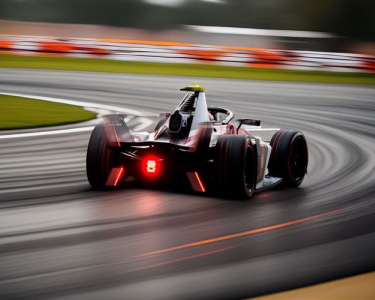







In the early 1900s, when Henry Ford introduced the Model T, the prevailing view among horse and cart salesmen was to simply sell “faster horses” rather than reimagining the entire mode of transportation. While the anecdote of "faster horses" may be apocryphal, it encapsulates the reluctance to embrace revolutionary change—a sentiment that echoes in today's challenges with OSS transformation. Henry Ford did not want to compete with faster horses, but rather to shift from horsepower to engine power. Modern OSS transformation requires a bold departure. Instead of simply speeding up old processes, we need to re-engineer our operational support systems to truly harness the potential of autonomous operations.
But the transformation story doesn’t end here. Much like General Motors' vision of “a car for every purse and purpose,” a vision of customization and scalability, the future of OSS lies in being adaptable to every business or operational need, and most importantly, at speed.
OSS has undergone significant evolution, starting from the humble beginnings of Network Management Systems to the modern cloud-native orchestration and automation systems. These modern OSSs have played an essential role in improving several engineering and operations KPIs.
However, this journey hasn’t been a smooth ride, often besieged by transformation complexities that have usually outweighed the perceived benefits of transformation.
- Alignment with engineering and operations teams across departments
- Multiple moving parts/dependencies due to network evolution, OEM upgrades/swaps, ongoing BAU programs, cloud migration initiatives, etc.
- Multiplicity of interfaces and data models
- Operational data variety, velocity, volume
- OSS COTS vendor roadmap and its readiness,
- Legacy and new co-existence
Established OSS and Cognitive OSS
The current state of OSS across the industry can be broadly summarized as established OSS evolving into cognitive OSS, characterized by the following features.
| Dimension | Established OSS | Cognitive OSS |
|---|---|---|
| Focus | Operational efficiency | Customer experience |
| Automation | Lifecycle automation and workflow rules | Zero-touch operations with AI-augmented functions |
| Human Role | Human-in-the-loop (manual intervention still required) | Human-on-the-loop (monitoring intelligent systems) |
| Architecture | Data lakes for specific use cases | Unified, cross-functional data platforms |
| Technology | Rule-based, process-oriented | Discriminative and Generative AI-powered |
| Autonomy Maturity | < Level 3 (limited automation) | Levels 3 & 4 (partial to high autonomy) |
The established to cognitive OSS evolution is our shift from horsepower to engine power, but what scales us to the "A Car for Every Purse and Purpose”?
Indeed, it’s about embracing AI agents for operations support systems. These AI agents will radically alter the landscape by replacing the traditional planning, inventory, fulfilment, and assurance systems. We have already seen Gen-AI-based advisors (Agents) becoming extremely valuable in network operations, improving MTTR for NOC and field operations. Below are a few illustrations of the tasks that agents can perform.
- Site Design Advisor: Assist in preparing RF datasheets and construction designs for the requested parameters.
- Change Advisor: Assist in implementing network changes by performing what-if analysis, conflict handling, and assessing the impact of service disruptions, if any.
- NF Deployment Advisor: Ensures the NF follows policy, serves its intended purpose, and handles any deployment fallouts.
- Service Experience Advisor: Assesses service impact degradation by correlating with resource-level network events and performance KPIs.
- Resolution Advisor: Performs RCA for reported faults and determines the action to be taken for resolution, then orchestrates the resolution steps.
- Dispatch Advisor: Enhances field dispatch with advanced diagnostic information so that the field fault can be resolved in a single visit
Now comes the "A Car for Every Purse and Purpose” moment. As these agents become mature and widespread, they (agents) can potentially replace the established OSS Systems in the future, thus radically changing the OSS landscape (from systems) to autonomous agents collaborating to achieve one or more engineering or operations outcomes.
Key agent features are:
- Task decomposition
- Task coordination and orchestration
- Workflow/lifecycle automation
- Enhanced and specific feedback optimization
Agentic OSS Characteristics
- OSS application turning into a data provider for autonomous agents
- Humans only for intent
- Pervasive data lake
- AI agents
- Autonomous network level 5
Now, let’s revisit whether the Agentic OSS approach can reduce the transformation complexities mentioned earlier.
Agents will enable radically different technology stacks, i.e., databases (or backend systems) and agents — AI-driven tools that will interact with data to meet user/operation’s needs. Instead of coding intricate backends or designing complex workflows, developers (and even end-users) will simply describe what they need to the agents, which will then generate their code to deliver the desired outcomes.
Thus, rather than engaging in a time-consuming and costly OSS transformation, it is more efficient to explore opportunities for introducing OSS agents. By initially focusing on these agents and scaling them over time, OSS systems can be transformed into modular and collaborative entities. This approach not only delivers agility and flexibility but also significantly reduces the complexity of the transformation process.